
There was once a culvert at the edge of the village. It wasn’t built over a canal or a river, but on a road. A makeshift wooden culvert—frail and weak. Yet, it allowed water to flow effortlessly from one side of the road to the other. Then… then one day, someone remembered that the village needed to undergo “development.” And in the development funds, there was indeed a plan to reconstruct that culvert into a concrete one. I was overjoyed thinking that the days of that poor, weak, old culvert were finally going to change. Soon, I heard that the concrete culvert was ready. Brimming with excitement, I went to see it.
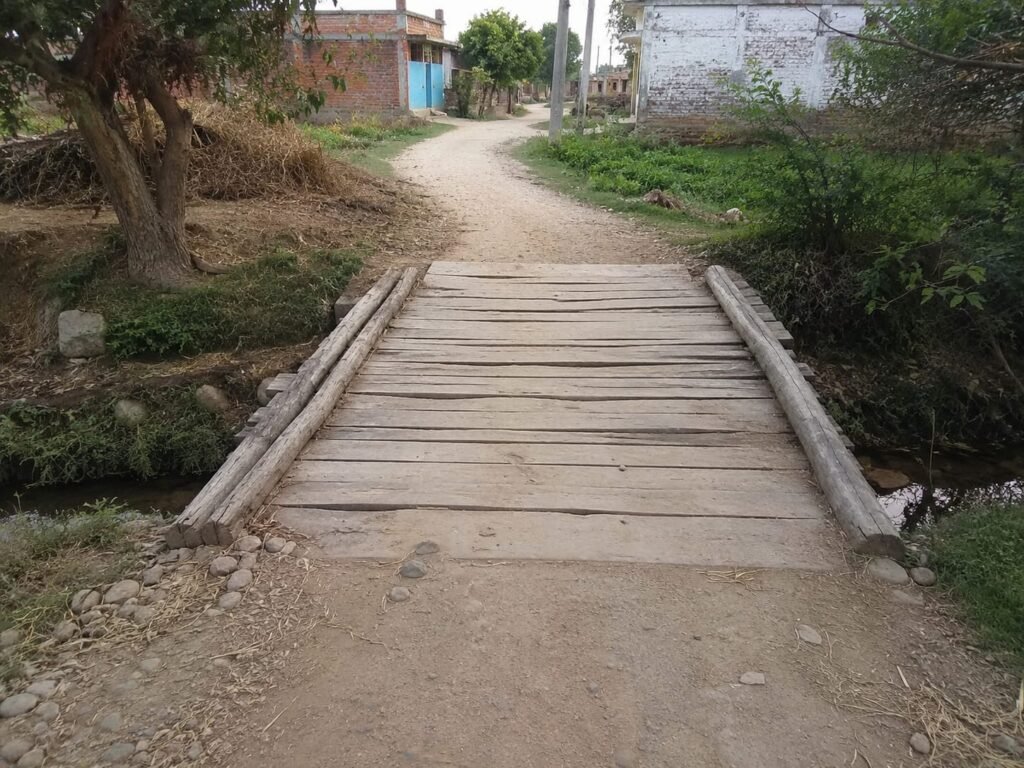
The culvert was indeed concrete now. However, it had shrunk from its original 18-20 feet to a mere 3-4 feet. A veteran engineer was with me. The moment he laid eyes on it, he exclaimed, “What on earth have they done? Now the fields on both sides of this will be ruined.” Explaining his point further, he said that while constructing any bridge or culvert, its length is determined by studying the volume and flow of water passing through it. Here, the length of the culvert had been shortened so drastically that the water pressure passing through it would become extremely high, causing severe soil erosion in the fields on either side. His words turned out to be absolutely true.
But after a few days, even that concrete culvert disappeared from the road. I found out that a ‘Bamma’ (a very thick concrete pipe) had been installed instead to drain the water. These Bammas entered and exited through farmer’s private land, which would have ruined the fields on both sides. When the farmers asked the Mukhiya (village head) for a solution, he casually replied, “This is not the Panchayat’s responsibility. If it bothers you so much, just block its mouth with soil.” And that is exactly what the people did. When I asked someone, “Now that you have blocked the passage, how will the water drain?” He replied with utmost innocence, “Water always finds its own way, don’t you worry about that.”
Now, fields on one side of the road drown in floods, while the fields on the other side die of drought. The floodwaters coming from the nearby ‘Dhaar’ (a small rivulet) choke to death amidst this “development” (the newly built road and concrete houses), never reaching the waiting fields.
Yet, the government insists, and its records show, that there is a culvert in the village, multiple Bammas, and to top it off, both an old and a new canal. Well, if the government says so, it must be true. “Yes, My Lord, you are absolutely right.” But if you ever happen to spot a culvert on the road, do let me know.
(This culvert is located in Brahmpura village, Benipatti block, Madhubani district, Bihar. Is there such a monument of “development” in your village too?)